WHAT ARE DIAMONDS?

|

In mineralogy, diamond (from the ancient Greek adámas, meaning "proper" or "unalterable") is an allotrope of carbon, where the carbon atoms are arranged in a variation of the face-centered cubic crystal structure called a diamond lattice. Diamond is the second most stable form of carbon, after graphite; however, the conversion rate from diamond to graphite is negligible at ambient conditions. Diamond is specifically renowned as a material with superlative physical qualities, most of which originate from the strong covalent bonding between its atoms. In particular, diamond has the highest hardness and thermal conductivity of any bulk material synthesized so far. Those properties determine the major industrial application of diamond in cutting and polishing tools.

Diamond has remarkable optical characteristics. Because of its extremely rigid lattice, it can be contaminated by only few types of impurities, such as boron and nitrogen. Combined with the wide transparency, this results in clear, colorless appearance of most natural diamonds. Small amounts of defects or impurities (about one per million of lattice atoms) color diamond blue (boron), yellow (nitrogen), brown (lattice defects), green, purple, pink, orange or red. Diamond also has relatively high optical dispersion, that is ability to disperse light of different colors, which results in its characteristic luster. Excellent optical and mechanical properties, combined with efficient marketing, make diamond the most popular gemstone.

Most natural diamonds are formed at high-pressure high-temperature conditions existing at depths of 140 to 190 kilometres (87 to 120 mi) in the Earth mantle. Carbon-containing minerals provide the carbon source, and the growth occurs over periods from 1 billion to 3.3 billion years, which respectively corresponds to roughly 25% and 75% of the age of the Earth. Diamonds are brought close to the Earth surface through deep volcanic eruptions by a magma, which cools into igneous rocks known as kimberlites and lamproites. Diamonds can also be produced synthetically in a high-pressure high-temperature process which approximately simulates the conditions in the Earth mantle. An alternative, and completely different growth technique is chemical vapor deposition. Several non-diamond materials, which include cubic zirconia and silicon carbide and are often called diamond simulants, resemble diamond in appearance and many properties. Special gemological techniques have been specially developed to distinguish natural and synthetic diamonds and diamond simulants.

HISTORY OF DIAMONDS

|

From myths about valleys of diamonds protected by snakes, to the production of millions of carats in rough diamonds each year, the history of diamonds is one of mystical power, beauty and commercial expertise.

Early History
The first recorded history of the diamond dates back some 3,000 years to India, where it is likely that diamonds were first valued for their ability to refract light. In those days, the diamond was used in two ways-for decorative purposes, and as a talisman to ward off evil or provide protection in battle.

The Dark Ages
The diamond was also used for some time as medical aid. One anecdote, written during the Dark Ages by St Hildegarde, relates how a diamond held in the hand while making a sign of the cross would heal wounds and cure illnesses. Diamonds were also ingested in the hope of curing sickness. During the early Middle Ages, Pope Clement unsuccessfully used this treatment in a bid to aid his recovery.


The Middle Ages
During the Middle Ages more attention was paid to the worth of diamonds, rather than the mystical powers surrounding them. Due to the heightened public awareness of the value of diamonds, mine owners perpetuated myths that diamonds were poisonous. This was to prevent the mineworkers swallowing the diamonds in an attempt to smuggle them out of the mines.

The popularity of diamonds surged during the Middle Ages, with the discovery of many large and famous stones in India, such as the Koh-I-Noor and the Blue Hope. Today India maintains the foremost diamond polishing industry in the world.


As the Indian diamond supply dwindled, smaller finds occurred in Borneo and Brazil, but these were not sufficient to meet the ever-increasing demand for diamonds. The mid-nineteenth century discovery of diamonds near the Orange River in South Africa sparked the world's biggest diamond rush, and helped to satiate the world's increasing appetite for diamonds.


Recent Times
During the mid-nineteenth century, diamonds were also being discovered in eastern Australia. However, it was not until late 1970's, after seven years of earnest searching, that Australia's alleged potential as a diamond producer was validated.

On October 2nd 1979, geologists found the Argyle pipe near Lake Argyle: the richest diamond deposit in the world. Since then, Argyle has become the world's largest volume producer of diamonds, and alone is responsible for producing over a third of the world's diamonds every year.


TYPES OF DIAMONDS

|

Diamonds are classified broadly under the categories of Natural Diamond, Synthetic Industrial Diamond and Thin Film Diamonds on the basis of their process of origination.

Diamonds remain to be the most fascinating gift that a woman can ever dream about. The word “diamond” is derived from a Greek word “adamas” which stands for “invincible". Due to its atomic structure, diamond is the hardest natural matter. This expensive and translucent gem is made of carbon.

Natural Diamonds, as the name indicates, are diamonds which originate in nature. Natural Diamonds are further classified into four categories depending on the type and amount of impurities in them. They are:
• The Type 1a: This type contains 0.3% of nitrogen and 98% of diamonds are of this type. They are either light yellow or brown in color because they absorb blue light.
• The Type 1b: This type contains 500 ppm of nitrogen. They are yellow, orange, green or brown in color.
• The Type 2a: This type contains little nitrogen and is almost free from all forms of impurities. This is the purest form of diamond and is generally colorless.
• The Type 2b: This type is a rare type of natural diamond and contains very little amount of nitrogen. The diamonds of this type are bluish in color and amounts for 0.1% of all the diamonds taken together.

DIAMOND TRADING COMPANIES

|

Aber Diamond Corporation, Toronto
Alrosa, Russia
Anglo-American plc, London
Ascorp, Angola
BHP Billiton
Cartier, New York
Damas, Dubai
De Beers Group
Debswana Diamond Company, Botswana
Endiama, Angola
Eurostar Diamonds Limited
Harry Winston Inc., New York
Leviev Group, Israel
Namdeb Diamond Corporation, Namibia
Rapaport Corporation, New York
Rio Tinto Diamonds, Belgium
Rosy Blue, Belgium
Tahera Diamond Corporation, Toronto
Tiffany and Co., New York
Zale Corporation, Texas

FAMOUS DIAMONDS

|

Allnatt Diamond
Centenery Diamond
Cullinan Diamond
Darya-ye Noor Diamond
Deepdene
Dresden Green Diamond
Dudley Diamond
Eugenie Blue Diamond
Excelsior Diamond
Florentine Diamond
Great Chrysanthemum Diamond
Great Mogul Diamond
Heart of Eternity Diamond
Hope Diamond
Hortensia Diamond
Idol’s Eye
Incomparable Diamond
Jones Diamond
Kimberley Diamond
Koh-i-Noor
Lesotho Promise
Millennium Star
Moussaieff red Diamond
Nizam Diamond
Ocean Dream Diamond
Oppenheimer Diamond
Orloff
Paragon Diamond
Portuguese Diamond
Premier Rose Diamond
Pumpkin Diamond
Red Cross Diamond
Regent Diamond
Sancy
Shah Diamond
Spirit of de Grisogono Diamond
Spoonmaker’s Diamond
Star of Arkansas
Star of the South
Steinmetz Pink Diamond
Taylor-Burton Diamond
The Golden Jubilee
Tiffany Yellow Diamond
Uncle Sam Diamond
Vargas Diamond

LOOSE DIAMONDS

|

If you are shopping for loose diamonds, be prepared to spend some time researching the subject. There are many variables that determine quality, value and prices of loose diamonds. Some you can control, others are based solely on market conditions and supply and demand. This site provides an overview of diamond terminology, the "4 C's", shapes of diamonds and explains diamond grading reports. Then we show you something no other web site does - a weekly price trend report we call the diamond prices index that shows current market pricing trends for certified loose diamonds. Recently Viewed Loose Diamonds by Our Visitors
Radiant 0.40 ct. I - VS2 $359 Details

Ideal Round 0.60 ct. H - IF $2,135 Details

Asscher 0.34 ct. D - VVS2 $769 Details

Marquise 1.12 ct. E - VVS2 $6,301 Details

Round 1.00 ct. F - VS1 $7,500 Details

Ideal Round 0.43 ct. G - IF $1,149 Details

Ideal Round 0.40 ct. G - IF $1,278 Details

Asscher 1.02 ct. E - VVS2 $4,283 Details

Round 0.45 ct. D - VS1 $1,145 Details


Loose Diamonds Search Engine
Browse our searchable database of diamond prices from leading online jewelers. The loose diamonds search engine provides the opportunity to compare diamond prices from multiple sources with one easy search and to save those results in a personal comparison list which can be emailed to and viewed by anyone you choose.

DIAMOND PRICE INDEX

|


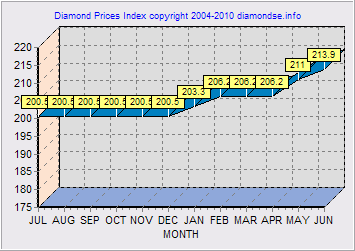
Diamond Prices Index™ - 200.5 unchanged
Month To Date ~ August 2009 ~ unchanged

Updated August 7, 2009 - Next update August 14, 2009

The main focus of this site is pricing trends by online diamond merchants. Online jewelers base their prices on a well trusted source in the industry, which updates prices every week for round loose diamonds and for other fancy shapes.

The diamond pricing in this report is published for jewelers, diamond wholesalers and diamond retailers only, and is not intened to be shared with the general public. We are not allowed to publish the specific contents of this price list, but we can show you what the overall pricing trend is for the industry as a whole on a week to week basis, so you can pick the best time to buy.

Shapes of Diamonds and Rings


Shapes of Diamonds


Round Brilliant


Princess


Emerald


Marquise


Radiant


Pear


H
eart


Oval


Asscher


Trillion Triangle

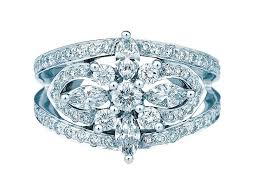
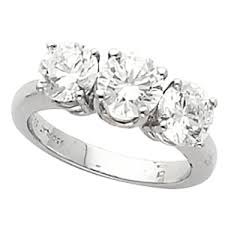
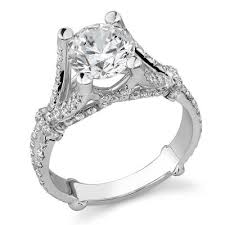
Pre-Set Diamond Engagement Rings